Reading the Docket, Reading the Room: A Practitioner's Guide to the New Discrimination-Law Landscape
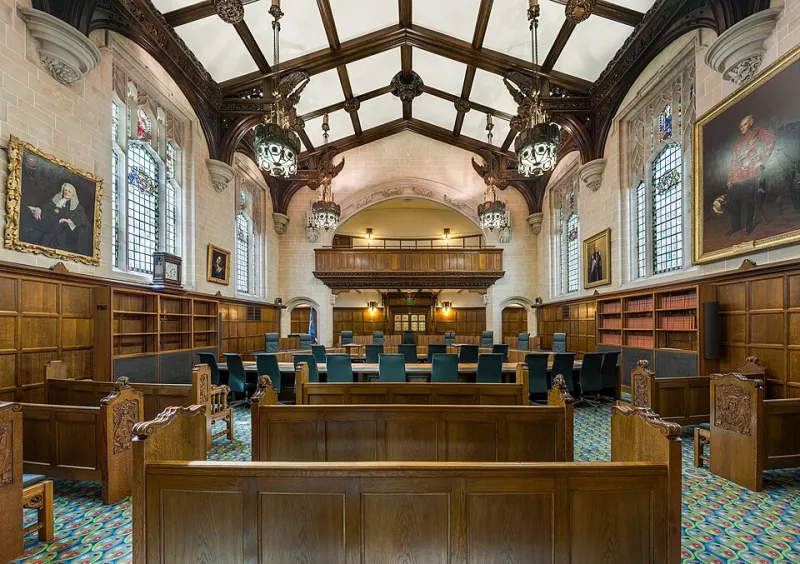
Photo: Diliff, CC BY-SA 3.0, via Wikimedia Commons
Case summaries are plentiful. Practical guidance is not. The past Supreme Court term, along with a steady stream of circuit decisions, has adjusted the mechanics of employment discrimination litigation in ways that will play out in offices, courtrooms, and partnership committees for years. Here is what the changes mean in operational terms.
The Higher Bar for Challenging Workplace Decisions
The Court continued its tightening of pleading and proof standards in employment matters, and several circuits have grown more skeptical of inference-based discrimination claims—cases built on statistical patterns and circumstantial evidence rather than direct statements.
What this means in practice: Plaintiffs-side practitioners should expect early dispositive motions to be the decisive battleground. Documentation discipline—contemporaneous notes, comparator evidence, preserved communications—has shifted from best practice to baseline necessity. Defense-side lawyers, meanwhile, should counsel clients that clean decision documentation is now the cheapest litigation insurance available.
Class Certification: Smaller Doors, Narrower Frames
Decisions affecting collective and class mechanisms continue to make broad workplace claims harder to certify, pushing claims toward individual arbitration or single-plaintiff suits.
What this means in practice: Systemic challenges to pay equity and promotion practices are increasingly won or lost at the certification stage. Attorneys advising organizations should understand that the practical exposure from a biased promotion process has narrowed but not disappeared—and that arbitration provisions are doing more structural work than any single ruling. Women lawyers evaluating their own employers' practices should recognize that aggregate data, while harder to deploy in court, remains powerful in internal advocacy and negotiation.
Title IX in Motion
The regulatory environment around Title IX has been volatile, with successive administrations revising grievance procedures and the courts weighing in on the scope of protections. The through-line is instability.
What this means in practice: Higher-education counsel should build compliance frameworks that are procedurally robust under any administration—clear timelines, trained adjudicators, documented findings. Attorneys advising students and faculty should track both the regulatory text and the litigation around it, because the operative standard can change mid-investigation.
The Career-Planning Layer
For women attorneys themselves, the term's docket is also a market signal. Practice groups in labor and employment, education law, and complex litigation are entering a period of sustained demand—clients need navigation, not just defense. Lawyers who develop genuine fluency in these shifting standards position themselves for cross-selling, speaking engagements, and, ultimately, the client-originating work that determines partnership trajectories.
Three moves worth making now:
- Build a monitoring habit. Follow circuit splits on discrimination standards; they are where the next Supreme Court grants will come from.
- Translate for clients. The lawyer who can explain a ruling in terms of HR policy and severance exposure becomes indispensable.
- Watch the state layer. With federal standards tightening, state fair-employment statutes—New York, California, Illinois—are becoming the more favorable forum. Venue analysis is now a core competency.
The term's outcomes are neither uniformly favorable nor uniformly hostile. They are, more than anything, a redistribution of where leverage lives. The practitioners who thrive will be the ones who moved first to find it.