Levity on the Record: When Wit Wins the Room — and When It Costs Women Lawyers the Case
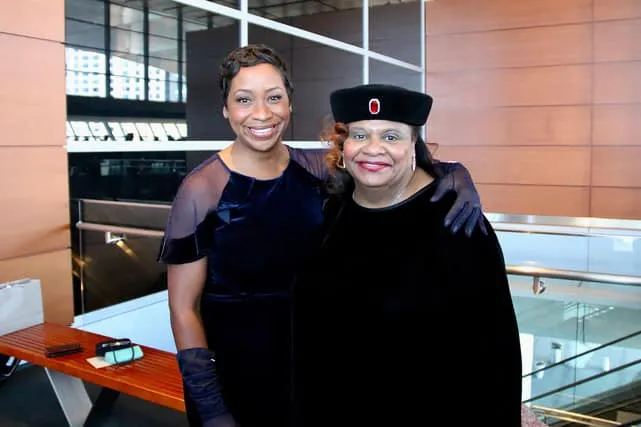
Photo: Office of Massachusetts Attorney General Andrea Campbell, Public domain, via Wikimedia Commons
Ask a room full of trial lawyers about the most memorable cross-examinations they have witnessed, and the answers often share a common thread: the moment that landed was not the exhibit or the objection, but the line. A dry observation. A perfectly timed pause followed by a question the witness could not wriggle out of. Humor, deployed deliberately, is one of the least discussed and most misunderstood tools in a litigator's kit — and for women in the courtroom, it is also one of the riskiest.
The Double Bind Behind the Punchline
Research on workplace communication has long documented a asymmetry in how humor is received. Studies of workplace feedback consistently find that women who use sharp or assertive humor are more likely to be described as abrasive or difficult, while identical behavior from male colleagues is read as confident or charismatic. In a courtroom, where impressions form quickly and juror perceptions harden fast, that asymmetry carries professional consequences.
Yet the answer, seasoned women litigators say, is not to abandon humor — it is to be strategic about it. The goal is not to be funny. It is to be memorable, credible, and in control of the room.
What Working Wit Actually Looks Like
The most effective courtroom humor, practitioners report, is rarely a joke. It is closer to understatement. A defense attorney in Philadelphia describes a moment in a contract dispute when the opposing witness claimed to have reviewed hundreds of pages in a single evening: "I asked whether he reads faster asleep or awake. The jury laughed — but more importantly, they remembered that they doubted him before I ever told them to."
Communication researchers point to several patterns that recur in successful examples:
- Self-deprecation, used sparingly. A brief, confident acknowledgment of one's own missteps can humanize, but overuse signals insecurity.
- Humor aimed at the evidence, never the person. Mocking a document's internal contradiction reads as sharp; mocking the witness reads as bullying — and jurors punish women for the latter far more readily.
- Levity at the right volume. A line that draws a smile from the bench works. A line that demands a laugh from the jury box can read as performing.
Calibrating for the Venue
Context determines everything. Before a judge, humor tends to function as a demonstration of composure — a signal that counsel is unruffled by pressure. Appellate practitioners note that a single well-placed observation about the record can make an argument stick in a judge's mind long after the session ends.
Before a jury, the calculus shifts. Juries reward authenticity and punish anything that feels rehearsed. Women trial lawyers describe testing lines in mock examinations and, just as often, cutting them. "If I have to explain that it was a joke, it was the wrong joke," one Texas litigator puts it.
And then there is the room that shapes careers as much as any courtroom: the partners' meeting. The same instinct that wins over a jury can land differently in firm leadership, where the 'abrasive' label is assigned in performance reviews rather than verdict forms. The practitioners interviewed for this piece describe a deliberate translation — softening delivery, keeping the analytical edge, and letting colleagues take ownership of the laugh.
A Skill Worth Training
For law students and early-career lawyers, the consensus among experienced trial attorneys is that wit is not a personality trait; it is a craft. It develops the same way cross-examination does — through repetition, feedback, and honest post-mortems. Moot court, clinic work, and even low-stakes negotiations offer rehearsal space.
The deeper lesson may be this: humor at its best in the courtroom is not about being liked. It is about demonstrating, in the span of a single sentence, that counsel sees the case more clearly than anyone else in the room. For women lawyers navigating a profession that still polices their tone, that clarity — delivered with a light touch — is not a gamble. It is a strategy.